
SleepiEST is a research project which aims to reduce road crashes caused by sleepiness through monitoring shift-workers who drive either as part of their work, or when commuting - with the data being used to estimate and predict motorists’ fatigue levels.
Edited 1 June 2026
The Road Safety Trust has awarded funding to Nottingham Trent University (NTU) and we are working alongside them to carry out the three-year SleepiEST project.
The project will result in a publicly available online fatigue management tool.
Although the research will focus on police officers and other police employees, the findings will be applicable to a wide range of shift workers, and those who drive to and from work outside normal working hours.
The project is being led by Professor John Groeger and Dr Fran Pilkington-Cheney, psychologists and sleep experts from NTU’s School of Social Sciences.
Data collection will occur in three phases. The first phase of the SleepiEst study concluded in January 2024. Thank you to all those who participated – we had almost 6000 responses!
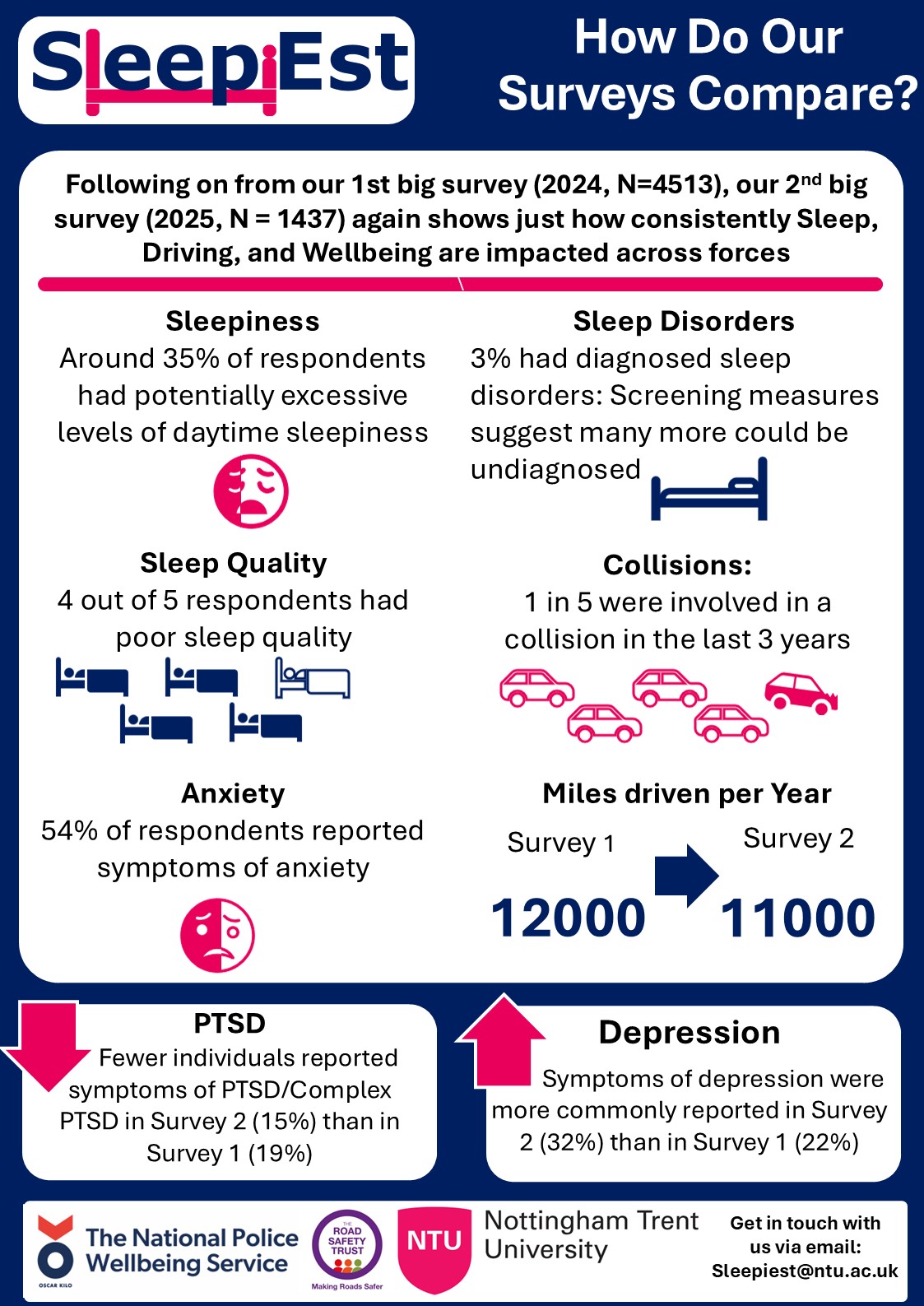
We are keen to provide a brief update with regards to some of the initial findings whilst the research team continue to examine the data collected. The below infographic shows key findings in the areas of sleep, wellbeing and driving.

Some of the findings are similar to those in other surveys that we have conducted in recent times, including the National wellbeing survey. We know that insufficient sleep, along with excessive fatigue are ongoing issues in policing and amongst shift workers in general, which is why we have developed services to assist in improving sleep and reducing fatigue.
Take a look at our other resources on our healthy living page if you would like to know more about improving your sleep, or check out our 'for individuals’ section if you want to explore other resources including our wellbeing toolkit and wider self-care resources.
Healthy living For individuals
Phase two
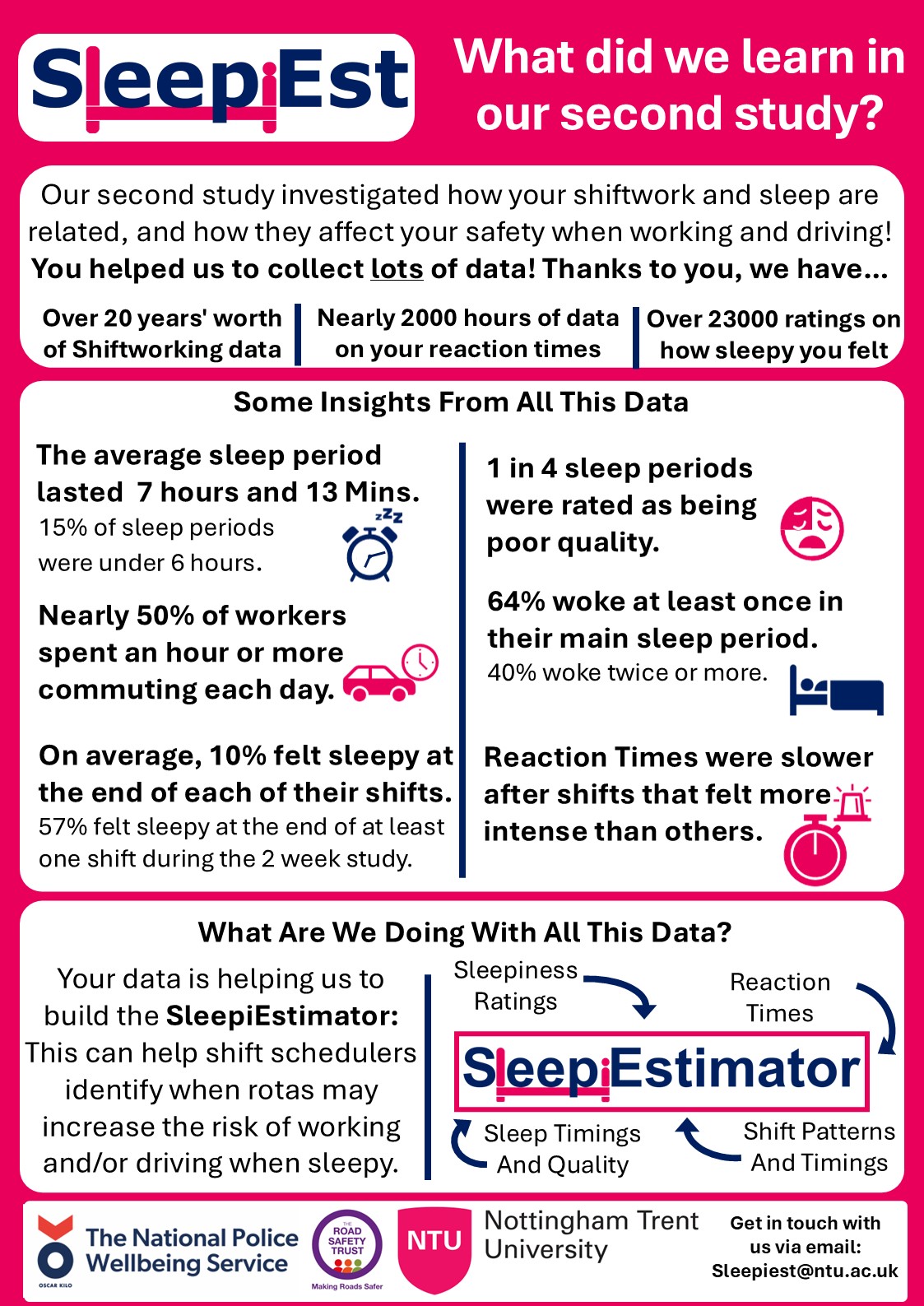
The project has now finished the second phase, which involved participants in a number of forces completing brief online questions and relevant tasks each day for a two-week period. The two infographics below show the results.
Phase three
Phase 3 is now well underway. This phase is more detailed than the earlier studies, with participants using wearable technology such as activity trackers and heart rate monitors to give a richer picture of sleep and fatigue.
There’s also been a significant amount of work behind the scenes to bring different data sources together. This has included setting up data sharing agreements with forces to access vehicle telematics data, which has taken time to put in place—particularly with some forces. That said, thanks to the support of colleagues across policing, this data is now starting to come through.
This is a really exciting step forward, as it’s believed to be the first study of its kind to combine telematics data with information collected directly from officers, helping to build a much clearer understanding of fatigue and its impact.
Although the original funding for the project has now come to an end, the Road Safety Trust has kindly granted a no-cost extension. This means the work can continue, including analysing the findings, developing the final model, and preparing a number of research papers for publication.
We’ll continue to share updates as the project progresses.